



In the original analysis of the Trilateral Commission in the 1970’s, the only
persons to actually interview and debate members of that elite group were Antony
C. Sutton and Patrick M. Wood. From 1978 through 1981, we together or
individually engaged at least seven different Commission members in public
debate.
On July 27, 1979, Radio Station KLMG, Council Bluffs, Iowa aired a highly informative
interview with George S. Franklin, Jr., Coordinator of
the Trilateral Commission and long-time associate of David Rockefeller.
1979
INTERVIEW WITH GEORGE S. FRANKLIN, JR.
COORDINATOR OF THE TRILATERAL COMMISSION
Introduction
In
the original analysis of the Trilateral Commission in the 1970’s, the only
persons to actually interview and debate members of that elite group were Antony
C. Sutton and myself, Patrick Wood. From 1978 through 1981, we together or
individually engaged at least seven different Commission members in public
debate.
{sidebar id=1}
On July 27,
1979, Radio Station KLMG, Council Bluffs, Iowa aired a highly informative
interview with George S. Franklin, Jr., Coordinator of
the Trilateral Commission and long-time associate of David Rockefeller.
Joe Martin,
the commentator on the program, invited authors Antony Sutton and Patrick Wood
to participate in the questioning. The program was probably the most
penetrating view of Trilateralism yet uncovered.
Only
one complete transcript remains intact from those interviews, and it is
reproduced below. Hopefully, this will give you some insight into the inner
workings, attitude and mindset of Commission members.
Lest anyone make accusation that this transcript was selectively
edited to show a "bad light" on the Commission, it is reprinted in
full, without edit. Editor's comments are added in certain places to clarify
the facts, when appropriate and are clearly identified to the reader as such. Members
of the Trilateral Commission are noted in bold type. The entire interview was
first and only published in the Trilateral Observer in 1979, which was
published by Patrick Wood and The August Corporation.
The Interview
Commentator: Hello.
Wood: Hello.
Commentator: Is this Mr. Wood?
Wood: Yes, it is.
Commentator: Patrick Wood, we have Antony Sutton on
the other line. You two are there now, right?
Wood: Yes.
Commentator: Are you there too, Mr. Sutton?
Sutton: Yes.
Commentator: All right. Before we get Mr. Franklin on the phone, tell us, what is
your concise opinion of the Trilateral Commission?
Sutton: It would seem that this is David Rockefeller's concept, his
creation, he financed it. The Trilateral Commission has only 77 or so American
members. It's a closed elitist group. I do not believe that they in any way
represent general thinking in the United States. For example, they want to
restrict the rights of the media in violation of the Constitution.
[Ed: Compare
this initial statement to Franklin's admissions during the interview.]
Commentator: They want to restrict the rights of the
media?
Sutton: Yes.
Commentator: All right, we have Mr. George Franklin on the phone right now,
okay? Hang on, gentlemen. Hello, am I talking to Mr. George S. Franklin?
Franklin: That is right.
Commentator: You are coordinator of the Trilateral
Commission?
Franklin: That is right.
Commentator: Mr. Franklin,
my name is Joe Martin. I have two other gentlemen on the line and I have
listeners on the line too, who would like to ask a few questions regarding the
Trilateral Commission. Are you prepared to answer some questions, sir?
Franklin: I
hope so.
Commentator: Is the Trilateral commission presently
involved in any effort to make a one-world?
Franklin: Definitely
not. We have not. We have no one-world doctrine. Our only belief that is shared
by most of the members of the Commission itself, is that this world will
somehow do better, if the advanced industrial democracy that serves Japan and
the United States can cooperate and talk things out together and try to work on
programs rather than at cross purposes, but definitely not any idea of a world
government or a government of these areas.
[Ed: "Definitely
not," says Franklin. Numerous statements in Trilateral
writings show Franklin is in error. For example: "The economic officials
of at least the largest countries must begin to think in terms of managing a single world economy in addition to
managing international economic relations
among countries," (Emphasis in original.) Trilateral Commission Task Force
Reports: 9-14, page 268.]
Commentator: Why is it, in the Trilateral Commission
that the name David Rockefeller shows
up so persistently or [the name of] one of his organizations?
Franklin: Well, this is very reasonable. David Rockefeller is the Chairman of the North American group.
There are three chairmen: one is [with] the North American group, one is [with]the Japanese group, and one is [with] the European group.
Also, the Commission was really David
Rockefeller's original idea.
[Ed:Note that Franklin does not say (at this point) that the
Trilateral Commission was financed and established by David Rockefeller.]
Commentator: On President Carter's staff, how many Trilateral Commission members do you have?
Franklin: Eighteen.
Commentator: Don't you think that is rather heavy?
Franklin: It is quite a lot, yes.
Commentator: Don't you think it is rather unusual? How
many members are there actually in the Trilateral Commission?
Franklin: We have 77 in the United States.
Commentator: Don't you think it is rather unusual to
have 18 members on the Carter staff?
Franklin: Yes, I think we chose some very able people when we
started the Commission. The President happens to think well of quite a number
of them.
Commentator: All right, we would like to bring in our
two other guests - men who have written a book on the Trilateral Commission.
You may be familiar with Mr. Antony Sutton and Mr. Patrick Wood?
Franklin: I have not met them, but I do know their names, yes.
Commentator: Mr. Sutton and Mr. Wood, would you care
to ask Mr. Franklin a question?
Sutton: Well, I certainly would. This is Tony Sutton.
You have 77 members of which 18 are in the Carter
Administration. Do you believe that the only able people in the United
States are Trilateralists?
Franklin: Of course not, and incidentally, the 18 are no longer
members of the Commission because this is supposed to be a private organization
and as soon as anybody joins the government they no longer are members of the
Commission.
Sutton: Yes, but they are members of the Commission
when they join.
Franklin: That is correct.
Sutton: Do you believe that the only able people in
the United States are Trilateralists?
Franklin: Of course not.
Sutton: Well, how come the heavy percentage?
Franklin: Well, when we started to choose members, we did try to
pick out the ablest people we could and I think many of those that are in the Carter Administration would have been
chosen by any group that was interested in the foreign policy question.
Sutton: Would you say that you have an undue influence
on policy in the United States?
Franklin: I would not, no.
Sutton: I think any reasonable man would say that if
you have 18 Trilateralists out of 77 in the Carter Administration you have a preponderant influence.
Franklin: These men are not responsive to anything that the
Trilateral Commission might advocate. We do have about two reports we put out
each year and we do hope they have some influence or we would not put them out.
[Ed: The
Trilateral Commission puts out considerably more than two reports each year. In
1974 and 1976, it was four in each year plus four issues of
"Trialogue"]
Sutton: May I ask another question?
Franklin: Yes.
Sutton: Who financed the Trilateral Commission
originally?
Franklin: Uhh. . .The first supporter of all was a foundation called
the Kettering Foundation. I can tell you who is financing it at the present
time, which might be of more interest to you.
[Ed: This is
what Franklin said in another interview: "In the meantime, David
Rockefeller and the Kettering Foundation had provided transitional
funding."]
Sutton: Is it not the Rockefeller Brothers' Fund?
Franklin: The Rockefeller
Brothers' Fund? The North American end of the Commission needs $1.5 million
over the next 3 years. Of this amount, $180,000 will be contributed by the Rockefeller Brother's fund and $150,000
by David Rockefeller.
Commentator: Does that mean that most of it is being
financed by the Rockefellers?
Franklin: No, it means that about one fifth of the North
American end is being financed by the Rockefellers
and none of the European and Japanese end.
Commentator: Do you have any further questions, Mr.
Sutton?
Sutton: No, I do not.
Commentator: Do you have a question, Mr. Wood?
Wood: Yes, I have one question. In reading your
literature and reports, there is a great deal of mention of the term
"Interdependence".
Franklin: Right.
Wood: While we can see that there is some need for the
world to cooperate in many areas, this system of interdependence seems to have
some very profound effect on the United States structure as it is today. For
instance, our national structure versus the interdependent structure in the
world. Now, do you feel that this interdependent structure has been properly presented
to the American public for approval or disapproval?
Franklin: Well, I don't think that it is a question of approval
or disapproval altogether. For example, we get a great deal of our natural
resources from abroad. Everybody knows that we get a great deal of oil from
abroad. So, whether we like it or not, we are much more dependent on other
nations that we used to be. Now, this does not mean that they make our
decisions for us on what our policies are going to be and our energy policies
are made here by the President and Congress. Now, they do consult others about
them because they have to, because unfortunately we are forced to become
interdependent.
[Ed: The term
"interdependent" is a key word in Trilateralism. Think for a moment:
The known world has always been more or less interdependent. Trilateralists use
"interdependence" in a manner analogous to the propaganda methods of
Goebbels: if you repeat a phrase often enough people will begin to accept it
automatically in the required context. The required context for Trilaterals is
to get across the idea that "one-world" is inevitable."]
Commentator: Does that answer your question, Mr. Wood?
Wood: Well, perhaps not completely, let me phrase that
another way. Do you feel that your policy - that is, those who represent the
Trilateral policy as well as interdependence - do you feel that that philosophy
is in accord with the typical American philosophy of nationalism and democracy
and so on?
Franklin: Well, I think I would answer that this way. First, we
are in fact interdependent. I say, unfortunately, we depend on much more that
we used to. Therefore, we have to cooperate far more than we used to. But, that
does not mean that we are giving other people the right to determine our policy
and we do not advocate that. You will not find that in any of our reports.
[Ed: Notice
how Franklin ducks around the key issue presented by Wood, i.e.,
whether the concept as used by Trilaterals is inconsistent with generally
accepted American ideals. Wood said nothing about "...giving other people
the right to determine our policy." This is a straw man erected by Franklin to duck the
issue.]
Wood: Do you feel that the Trilateral Commission
position has been publicized really at all around the country?
Franklin: We try to publicize it, we do not altogether succeed
because there are so many other people who also want publicity, but we do try.
Anything we do is open to public scrutiny.
[Ed: The August
Corporation had recently commissioned a thorough search of the massive New York
Times computerized data base. We came up with a very meager list of references
to Trilateralism. Only 71 references in the past six years in
all major U.S. and foreign publications. Many of these were no more than
short paragraphs. We know that the Trilateral Commission mailing list has only
4,000 names including all its 250 members, 600 or so Congressmen and elitists.
In brief, media coverage has been - and is - extremely small. The 71 citations
by the way include mostly critical articles from independent authors. It also
includes such efforts as the Time front-page
promotion of Jimmy Carter for President - probably the key effort on Carter's behalf. Hedley Donovan was then Editor-in-Chief of Time.]
Commentator: Mr. Sutton?
Sutton: Paul
Volcker was a member of the Trilateral Commission and has just been
appointed Chairman of the Federal Reserve Board. Does Paul Volcker have any connection with Chase Manhattan which is
dominated by Rockefellers?
Franklin: He was, quite a long time ago, on the staff of [Chase]
Manhattan.
[Ed: Paul Volcker
has
twice worked for Chase Manhattan Bank. In the 1950's as an economist and again
in the 1960's as Vice President for Planning. We cannot deny that Volcker "knows
about (Trilateral) financial policies" as stated by Franklin.]
Sutton: Don't you think that this is quite an
unhealthy situation, where you have a man connected with Chase who is now
Chairman of the Federal Reserve Board? Doesn't this give some credence to the
criticism of elitism?
Franklin: Conflict of interest?
Sutton: Yes.
Franklin: It does give some credence to it. On the other hand,
it is very important that the Chairman of the Federal Reserve Bank know about
our financial policies and, therefore, will certainly have been connected to
some financial institution. This has not always been the case. I think that
anyone who knows Paul Volcker, knows that he is an
extraordinarily objective person. I think if you would notice, that the
editorial comments on his appointments were almost uniformly favorable, there
must have been some that were unfavorable, but I have not seen them.
Sutton: May I ask another question?
Commentator: Go Ahead.
Sutton: Mr. Donovan,
of Time-Life, has just been appointed Special Assistant to President Carter. Mr. Donovan is a member of your Commission.
Franklin: That is correct.
Sutton: Does this not emphasize the fact that the Carter Administration is choosing its
administration from an extremely a narrow range. In other words, the Trilateral
Commission?
Franklin: I do not think that that needs any confirmation. That
is a matter of fact that he has chosen most of his main foreign policy people,
I would have to say, from the people he got to know while he was on the
Trilateral Commission.
[Ed: Franklin admits that
the "Carter Administration is choosing its administration from an
extremely narrow range."]
Sutton: Well, I can only make the statement that this
leaves any reasonable man with the impression that the Carter Administration is dominated by the Trilateral Commission
with your specific ideas which many people do not agree with.
Franklin: Well, I would certainly agree that people who were
members of the Commission have predominant places in the foreign policy aspects
of the Carter Administration. They
are not, because they are members of the Commission, controlled in any sense by
us. I do think that they do share a common belief that is very important that
we work particularly with Europe and Japan or we are all going to be in
trouble.
Sutton: But this common belief may not reflect the
beliefs of the American people. How do you know that it does?
Franklin: I do not know that it does. I am no man to interpret
what the people think about.
Sutton: In other words, you are quite willing to go
ahead [and] establish a Commission which you say does not necessarily reflect
the views of the people in the United States? It appears to me that you have
taken over political power.
Franklin: I do not think this is true at all. Anybody who forms
a group for certain purposes obviously tries to achieve these purposes. We do
believe that it is important that Europe, Japan, and the United States get
along together. That much we do believe. We also chose the best people we could
get as members of the Commission. Fortunately, nearly all accepted. The
President was one of them and he happened to have thought that these were very
able people indeed, and he asked them to be in his government, it is as simple
as that. If you are going to ask me if I am very unhappy about that, the answer
is no. I think that these are good people.
Wood: May I ask a little bit more pointedly, if Carter got his education from the
Trilateral Commission, was not his dean of students, so to speak, Mr. Brzezinski?
Franklin: I cannot tell you exactly what role Brzezinski had, but certainly he did
have considerable effect on the education Carter
received on foreign policy.
Wood: Mr. Brzezinski
is on record in more than one of his books as being a proponent of
rejuvenating or redesigning the U.S. Constitution, is this correct?
Franklin: I have not read all his books, I have not seen that
statement, and I have worked with him very closely for three years and he has
not said anything of that sort to me.
Wood: As a matter of fact, he is on record and in one
of his books as indicating that the U.S. Constitution as it is today is not
able to lead us into an interdependent world and that it should be redesigned
to reflect the interdependence that we must move ahead towards.
Franklin: As I say, if you tell me that, I must believe it, and
I have not read that book and I have never got any inkling of that between 1973
and 1976.
[Ed: Here is what Brzezinski writes in one
of his books "Between Two Ages: America's Role in the Technetronic Era":
"Tension
is unavoidable as man strives to assimilate the new into the framework of the
old. For a time the established framework resiliently integrates the new by
adapting it in a more familiar shape. But at some point the old framework
becomes overloaded. The new input can no longer be redefined into traditional
forms, and eventually it asserts itself with compelling force. Today, though,
the old framework of international politics - with their spheres of influence,
military alliances between nation-states, the
fiction of sovereignty, doctrinal conflicts arising from nineteenth century
crises - is clearly no longer compatible
with reality." (Emphasis added)
and specifically
on changing the U.S. Constitution:
"The
approaching two-hundredth anniversary of the Declaration of Independence could
justify the call for a national constitutional convention to re-examine the
nation's formal institutional framework. Either 1976 or 1989 - the
two-hundredth anniversary of the Constitution – could serve as a suitable
target date culminating a national dialogue on the relevance of existing
arrangements... Realism, however, forces us to recognize that the necessary
political innovation will not come from direct constitutional reform, desirable
as that would be. The needed change is
more likely to develop incrementally and less overtly ... in keeping with the
American tradition of blurring distinctions between public and private
institution." (Emphasis added)
Obviously
Franklin is either unaware of the writing of his "close" associate
Brzezinski or is evading the question.
Commentator: I would like to interject a question if I
could. Mr. Franklin, within the
Trilateral Commission, are there any Trilateralists who have control of the
energy resources in this world?
Franklin: No. We have no major oil companies represented on the
Commission.
Commentator: I mean stockholders in oil companies.
Franklin: I am sure that David
Rockefeller must have some stock in an oil company. I do not know.
Commentator: Doesn’t David Rockefeller have stock in
Chase National Bank?
Franklin: Definitely
Commentator: Doesn't Chase National Bank have stock in
Exxon?
Franklin: Honestly, I do not know.
Commentator: Standard Oil? Mobil?
Sutton: Well, I do.
Franklin: I would be certain that some of their pension trusts
and some of the trusts that they hold for individuals, undoubtedly do.
Commentator: So, the Trilateral Commission has no
effect at all in the energy field at all?
Franklin: Yes, the Trilateral Commission has written a report on
energy. There were three authors, there were always three authors. The American
author was John Sawhill, who was
formerly head of the Energy Administration and is now presently of New York
University.
Commentator: I have read where the oil and gas world
is dominated by seven major firms, do you agree with that?
Franklin: I do not have expertise in this field, but I think it
sounds reasonable.
Commentator: Well, a listing of controlling ownership
in these major oil and gas companies by banks - by Trilateral Commissioners -
is listed as Manufacturer's Hanover, Chase Bank, Wells Fargo Bank, First
National Bank of Chicago, and First Continental of Illinois. And these all
supposedly are of Trilateral representation. Is that
true, sir?
Franklin: No, sir, it is not true. Give me the list again. I
think I can tell you which are and which are not.
Commentator: Manufacturer's Hanover.
Franklin: No, sir, it is not.
Commentator: There are no stockholders in that, who
are members of the Trilateral Commission?
Franklin: Wait a minute. I cannot tell you whether there are no
stockholders in Manufacturer's Hanover. I might even be a stockholder in
Manufacturer's Hanover. I am not.
Commentator: Chase Manhattan figures prominently.
Franklin: Chase Manhattan certainly.
Commentator: ..which is David Rockefeller's Bank!
Franklin: There is no question about that.
Commentator: So there is some connection with the
energy field.
Franklin: Well, yes.
Commentator: So, if Chase Manhattan has stock in
Exxon, Mobil, and Standard Oil, then there is a direct connection there?
Franklin: Well, yes.
Commentator: So, if Chase Manhattan has stock in
Exxon, Mobil, and Standard Oil, then there is a direct connection there?
Franklin: I am sure that is true. Every bank runs pension
trusts, so it must have some of its trust money in some of those companies.
Commentator: I have read, and I do not know if it is
true, you may answer this, that Chase Manhattan is a number one stockholder in
Exxon, number three in Mobil, and number two in Standard Oil.
Franklin: I just would not know.
Commentator: Do you have any questions, Mr. Sutton?
Sutton: Yes, the figures you have just quoted about
Chase Manhattan stock ownership in the oil companies: these were published by
the U.S. Senate some years ago. There is a series of these volumes. One, for
example, is entitled "Disclosure of Corporate Ownership."
[Ed: Any
reader investigating further should note that the ownership is heavily
disguised by use of nominee companies. For example "Cudd
& Co." is a ficticious nominee name for
Chase Manhattan Bank.
A partial
list of nominees which have been used by Chase Manhattan Bank includes the
following:
|
Andrews & Co.
|
Elzay & Co.
|
Reeves & Co.
|
|
Bedle & Co
|
Gansel & Co.
|
Ring & Co.
|
|
Bender & Co.
|
Gooss & Co.
|
Ryan & Co.
|
|
Chase Nominees Ltd.
|
Gunn & Co.
|
Settle & Co
|
|
Clint & Co.
|
Kane & Co.
|
Taylor & Witt
|
|
Cudd & Co.
|
McKenna & Co.
|
Timm & Co.
|
|
Dell & Co.
|
Padom & Co.
|
Titus & Co.
|
|
Egger & Co.
|
Pickering Ltd. & Co.
|
White & Co.
|
|
Ehren & Co.
|
|
|
Franklin: I am sure that these banks could run billions of
dollars through trusts and some of the trusts must be invested in some of these
major oil companies.
Commentator: Then the Trilateral Commission member who
has stock in the bank and who is also a high-ranking Trilateral Commission
member, would have some jurisdiction over energy?
Franklin: No, not really. I know some of the management of these
companies. They are not controlled by the stockholders the way they used to be.
Wood: Let's put that question another way if we might.
It perhaps would be erroneous to say Chase Manhattan Bank controlled Exxon,
because in fact, they do not. However, Chase Manhattan Bank is the largest
single shareholder that Exxon has. Considering the discussion going on about
the major oil companies, and their part in this energy crisis, don't you think
that it would be possible to exercise control from Chase Manhattan Bank to put
pressure on Exxon to help alleviate the energy crisis?
Franklin: Well, I think you could answer that kind of question
just as well, as I can. Everybody has their own views on these things.
Commentator: You must be familiar with the members of
your Commission, especially with Mr. Rockefeller
and his various holdings?
Franklin: I am extremely familiar with Mr. Rockefeller, I have known him
for nearly 50 years.
Commentator: ... and his holdings?
Franklin: I am not at all familiar with his holdings.
Commentator: I think everybody is familiar with his
holdings. I thought everybody was familiar with his holdings, I know he owns
Chase Manhattan Bank.
Franklin: No, that is not true.
Commentator: I mean, he is
the largest stockholder.
Franklin: That, I would agree to. I would say that he has about
five percent, I am not sure.
Commentator: Five percent? Would you agree with that,
Mr. Sutton?
Sutton: Yes, plus he is chairman of the board.
Franklin: Yes, that is correct. I have no doubt that he does control
Chase Manhattan Bank.
Commentator: You have no doubt about that?
Franklin: No, basically, no. Directors are important.
Commentator: Do you have any doubt that as chairman,
he controls the bank and Chase Manhattan also controls or at least partly controls
the American Electric Power [the utility company]?
Franklin: I do not know anything about it.
Commentator: You are not sure about that?
Franklin: I just don't know. These things do not ever really
enter into consideration. If you look at our energy report that will tell you
whether you think this is an objective or effective document or not.
[Ed: Chase
Manhattan Bank owns 1,646,706 shares of American Electric Power Company through
two nominees, <Kane & Co. (1,059,967 shares) and Cudd
& Co. (586,739 shares)>. This gives it a direct 2.8 percent of the
total. However numerous other holding in American Electric Power are maintained
by banks and firms where Chase has some degree of control. For example, Morgan
Guaranty has almost 500,000 shares and is dominated by J.P. Morgan; the second
largest stockholder in J.P. Morgan is Chase Manhattan Bank.]
Commentator: Mr. Sutton?
Sutton: Can we go off energy for a while?
Commentator: Yes.
Sutton: I have a question for Mr. Franklin. Who chooses the members of the Trilateral
commission?
Franklin: The Trilateral Commission's Executive Committee.
Sutton: Who comprises the committee?
Franklin: Who is on that committee?
Sutton: Yes.
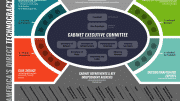
Franklin: Okay. William
Coleman, former Secretary of Transportation, who is a lawyer; Lane Kirkland, who is Secretary-General
of the American Federation of Labor; Henry
Kissinger, who does not need too much identification; Bruce McLaury, who is president of the
Brookings Institution; David Rockefeller;
Robert Ingersoll, who was formerly
Deputy Secretary of State and Ambassador to Japan; I. W. Able, who was formerly head of United Steelworkers; and William Roth, who is a San Francisco
businessman and was chief trade negotiator in the previous Kennedy trade round.
Sutton: May I ask a question? How many of these have a
rather intimate business relationship with Mr. Rockefeller?
Franklin:
Henry Kissinger is chairman of Mr. Rockefeller's Chase Advisory Committee.
Sutton: Coleman?
Franklin:
Coleman, I don't think has any
business relationship with him, he is a lawyer.
[Ed: In fact William Coleman is a Director of Chase Manhattan Bank which Franklin has already admitted
to be controlled by David
Rockefeller.]
Sutton: Mr. Ingersoll?
Franklin: Mr. Ingersoll,
I don't think has any business relationship.
Sutton: Isn't he connected with First Chicago?
Franklin: He is vice chairman of the University of Chicago.
Sutton: No, what about the First Bank of Chicago?
[First Chicago Corp.]
Franklin: I don't believe that Ingersoll has any relationship
with banks in Chicago, but I don't know for certain on that.
[Ed: Robert
Stephen Ingersoll before joining the
Washington "revolving door" was a director of the First National Bank
of Chicago, a subsidiary of First Chicago Corp. The largest single shareholder
in First Chicago is David
Rockefeller's Chase Manhattan Bank. Ingersoll has also been a director of Atlantic Richfield and Burlington Northern.
Chase Manhattan is also the largest single stockholder in these two companies.
Thus, Ingersoll has a long standing relationship with Rockefeller interests.]
Commentator: We are adding another man to the interview, his name is Mr. John Rees, a very fine writer from the Review of the News,
Washington, D.C., who is in the area right at this time to make some speeches.
Sutton: Mr. Franklin,
do you believe in freedom of the press in the United States?
Franklin: Definitely, of course.
Sutton: Let me quote you from a book "Crisis In Democracy," written by Michel Crozier, who is a Trilateral member.
Franklin: Correct.
Sutton: I am quoting from page 35 of his book:
"The media has thus become an autonomous power. We are now witnessing a
crucial change with the profession. That is, media tends to regulate itself in
such a way as to resist the pressure from financial or government interests."
Does that not mean that you want to restrict the press in some way?
Franklin: I can't quite hear you.
Sutton: Let me paraphrase this for you. I think I will
be clear in my paraphrasing. The Trilateral Commission is unhappy with the
press because it resists the pressure from financial or government interests.
That is one of your statements.
Franklin: Now, let me say something about our book. The book
that we put out, the report, is the responsibility of
the authors and not of the Commission itself. You will find that in the back of
a number of them, and that book is one of them, that other members of the
Commission will hear dissenting views, and you will find dissenting views in
the back of that book on the press question.
Sutton: I would like to quote a further statement from
the same book and leave the questions at that point: "The media deprives
government and to some extent other responsible authorities of the time lag and
tolerance that make it possible to innovate and to experiment responsibly."
What the book recommends is something like the Interstate Commerce Commission
to control the press. This seems to me to be a violation of the Constitution.
Franklin: I would agree with you that we do not want something
like the Interstate Commerce Commission to control the press.
[Ed: Michel
Crozier, et al, in Crisis In Democracy make the following statements with reference to
the "Interstate Commerce Act and the Sherman Anti-trust Act":
"Something
comparable appears to be now needed with respect to the media.... there is also
the need to assure to the government the right and the ability to withhold
information at the source" (page 182).
The authors
go on to argue that if journalists do not conform to these new restrictive
standards then "The alternative could well be regulation by the
government."]
Sutton: I fail to understand why the Trilateral
Commission would associate itself with such a viewpoint.
Franklin: As I just mentioned to you. We hired three authors for
each report. The authors are allowed to say what they think is correct. What
the Trilateral Commission does is this: It says we think this report is
worthwhile for the public to see. This does not mean that all the members of
the Commission agree with all the statements in the report and, in fact, a majority
of them might disagree with certain things. Now, where a statement is one that
many Commissioners seem to disagree with we then do put in the back a summary
of the discussion. That book does have a summary of the discussion of our
meeting which questions various things in the book, in the back of it.
Sutton: Would you say Mr. Franklin that the members of the Commission do have a common
philosophy?
Franklin: Yes. I think a common philosophy. I think that all of
them believe that this world will work better if the principal industrial
powers consult each other on their policies and try to work them out together.
This does not mean that they will agree on everything. Of course, they won't.
But, at least they will know what the other countries feel, and why they feel
it.
Sutton: The
Financial Times in London -- the editor is Ferdy Fisher, a Trilateralist. He fired a long time editorial
writer, Gordon Tether, because Tether wanted to write articles criticizing the
Trilateral Commission. Do you have any comments?
Franklin: I didn't know that at all. It sounds terribly
unlikely, but if you say that it is so, probably it is.
[Ed: See Chapter
Seven "Trilateral Censorship: the case of C. Gordon Tether" in
Trilaterals Over Washington. Trilaterals see the media as the "gatekeeper"
and comment as follows:
"Their
main impact is visibility. The only real event is the event that is reported
and seen. Thus, journalists possess a crucial role as gatekeepers of one of the
central dimensions of public life."]
Rees: Frankly, Mr. Martin, with Antony Sutton on the
line, I feel absolutely a novice, because Antony is a real expert on the
Trilateral.
Sutton: Well, I am looking for information.
Commentator: Are you getting information?
Sutton: Yes, I am very definitely getting information.
Commentator: Do you have any other questions?
Sutton: Not at the moment. I'd rather hear someone
else.
Commentator: Alright.
Wood: I do have one question, if I might. You
mentioned earlier that as you decided to issue a report, whether it reflected
Trilateral policy or not, you felt that it was worthy to be shared with the
public. Is that correct?
Franklin: We do not have a Trilateral policy, except for the
very broad policy [which] is that each of these major areas ought to know what
the other countries are doing and why and try to work things out as much as
possible. That is our only Trilateral policy, I would
say. We don't have a policy on energy and a policy on monetary reform and a
policy on, etc.
[Ed: The latest
issue of Trialogue (Summer 1979) has an opening paragraph as follows:
"The
draft report presented in Tokyo by the Trilateral Task Force on Payments
Imbalances analyzes the extreme payments imbalances which have marked the world
economy throughout the 1970's and offers a series of broad policy
recommendations...”
Part II of
the same issue has the following opening paragraph:
"The
draft report presented in Tokyo by the Trilateral Task Force on Industrial
Policy... reviews the desirable aims and criteria of trilateral industrial
policies and their international implications."
Yet Franklin asserts
"We don't have a policy on energy and a policy on monetary reform,
etc."]
Wood: Okay, let me ask a question. Based on that then,
what efforts have you made, if any, to publish these articles or these studies
so they might be reviewed by the general American public? For instance, I have
never seen one study published in any major popular magazine, whether it be Time Magazine, a newspaper -- in fact, there have been
very few references. Over a period of six years now, there have been few
mentions of the name "Trilateral Commission" in the nations press.
This is backed up by the New York Times data base, which is one of the most
extensive in the world. Now if these are made public, can you tell me how these
are made public?
Franklin: Yes. What we do is, that we have a list of about 4,000
people, some of whom request them and some of whom we thought would be
interested if we sent them -- and we send them free -- and we would be glad to
send them to you, for example, if you would like to have them. Now we also, when we publish, when we send them out to a
considerable list of press correspondents. We also have press lunches
and things. Because of the nature of this thing, it can't be printed in full,
because they are just too long. No newspaper wants to print a 40- or 50-page
study. But, there have been mentions of one or two of the studies in Newsweek.
We would like to get more published, frankly, very much more than we have been
getting. Now in Japan, for example, we have done much better. At our last
plenary session in Tokyo, members of the Commission who were there,
gave over 90 separate interviews to members of the Japanese press who were
present. In fact, there were many more requests than that which we could not
honor because there was not time. We have not done anything like as well in
this country.
Wood: Allow me to ask you this. This takes
specifically one case, the case of Time Magazine. Hedley Donovan is the former editor-in-chief of that magazine. I understand
he is recently retired, and also you have as a member of your Commission, Sol Linowitz, also a director of Time.
Now, Time-Life books, of course, you have Time Magazine, Fortune, Money and
People. Now I would ask you -- considering the special advantage you have by
having such a giant as Hedley Donovan and
Sol Linowitz as well, both connected
to Time -- don't you feel that if you really wanted to publicize these
"position papers" that it would only take a scratch of the pen by Mr.
Donovan?
Franklin: No, I don't, and I will tell you why. Hedley Donovan is not only a member of
the Commission, but he is one of my close personal friends. Hedley Donovan is also a person of
great integrity. He will not publish anything we do because he is connected
with it. He looks out for the interest of Time, and he does not feel we were
worth Time publicity, and I am sure he will be exactly the same way in the
White House. He is going to be loyal to his President and to his job.
Wood: But Time Magazine is the largest news magazine
in the country?
Franklin: Right. We only had a little publicity, but we had only
what Hedley would have given,
whether or not he was a member of the Commission.
Wood: So, he basically thinks that the Commission
really does not matter.
Franklin: No. He does not, or he would not be a member of the
Commission at all. Time Magazine does give us some money, not very much, but
$2,500 a year to be exact. But, his editorial judgment is not biased by the
fact that he is a member of the Commission.
Commentator: Mr. Rees, would you like to ask a
question?
Rees: Yes, Mr. Franklin,
I noticed that you were saying that the Trilateral Commission takes no
responsibility for the use of the publisher's imprimatur, but I would be
interested to know about how you go about selecting your writers to put out the
various positions.
Franklin: Well that is a very interesting question. We have a
meeting with the chairmen. The way the situation is organized is this. There
are three chairmen, one from each of the three areas. Three secretaries, one
from each of the three areas, and I, have got an intermediate staff job called
"coordinator." Now, the chairmen and secretaries meet with what they
have jointly, will discuss not only topics they think will be useful to have,
but also authors for these topics. The topics are then discussed by the whole
Commission and approved or changed slightly. The authors are chosen by members
of the staff and consultation with the chairmen.
Rees: So, although you do not take responsibility for
the finished product you are responsible for the selection of the writers.
Franklin: Very much. No question about that.
Rees: So it does have your imprimatur stamp of
approval each time?
Franklin: In that sense. We certainly choose the writers, and we
choose them because we think they are very good, obviously. So far, every
single report that has been written by the authors has, in fact, been accepted
for publication by the Commission.
Rees: Then the report on the news media was accepted?
Franklin: It was accepted, but there was a lot of disagreement
with that. It was felt that it was an important statement, with quite a lot of
interesting new ideas in it. It was also a very strong opposition which was
reflected in the back of the report in a section, I
think it is entitled, "Summary of Discussion."
Commentator: Mr. Sutton, do you have any other
questions?
Sutton: I have one more question,
that goes to a new field entirely: taxation. We have established that David Rockefeller is chairman and
single most powerful influence in Chase Manhattan Bank. Now, do you happen to
know the tax rate that Chase Manhattan pays in the United States?
Franklin: I don't know . . . happen to know -- it is about 50%
[fifty percent].
Sutton: I will give you some figures. In 1976, Chase
Manhattan Bank's tax rate was precisely zero. I am wondering why, if you are so
influential politically, why at least you cannot pay a tax rate more equivalent
to that of the average American Taxpayer, which is 15% or 20% or 30%.
Franklin: I have nothing to do with Chase Manhattan Bank. But if
the tax rate was zero, it must have been because it had very large real estate
losses in that year, I think.
Sutton: In 1975, it was 3.4%. It is always way under
10%.
Franklin: Well, that is extremely interesting. It is a
new fact for me.
Sutton: Well, my point is this, that you are willing
to guide the United States into the future, but apparently you are not willing
to pay your fair share of the costs.
Commentator: You are talking about the Commission
members as a whole?
Sutton: Yes.
Franklin: I think you will find that the Commission members pay
whatever the laws says they are supposed to pay under the circumstances. I do
not know what the particular reason was on Chase. They did have heavy losses, I am not familiar enough with their situation to be
able to tell it to you.
Wood: May I ask another question along that same line,
please?
Commentator: Go ahead.
Wood: In that same year, 1976, it is recorded that
some 78% of Chase Manhattan's earnings came from International operations. That
leaves 22% from the U.S... Don't you think perhaps this might be a conflict of
interest, between choosing their international policy versus their domestic
policy in the United States?
Franklin: Well, I think that is true of most of the major banks.
Now, that does not answer your question, I recognize.
Wood: Where would their loyalty lie? If on one hand
they are trying to look out for America, yet on the other hand they are trying
to look out for their bread and butter, which is not America.
Franklin: First, in the long run, I think any of our major
corporations must recognize, that unless the United States does well, they are
going to be in the soup. Secondly, some of these people, you may or may not
believe it, have enough integrity, they can divorce their interest, like Hedley Donovan could, on the question
of publicity on the Trilateral Commission.
Commentator: Gentlemen, I think we are running out of
time here. I think we have reached the end of the interview. We would like to
thank you, Mr. Franklin, Mr. Wood,
and Mr. Sutton. Thank you for being guests on our show.